Key takeaways
- Skeleton ESP helps weakpoint reads — not substitute for player box discipline
- Head markers win duels only when line of sight and recoil control already align
- Separate human skeleton styling from ability deployable overlays
- Thinner bone lines and distance gates keep skeleton ESP readable at range
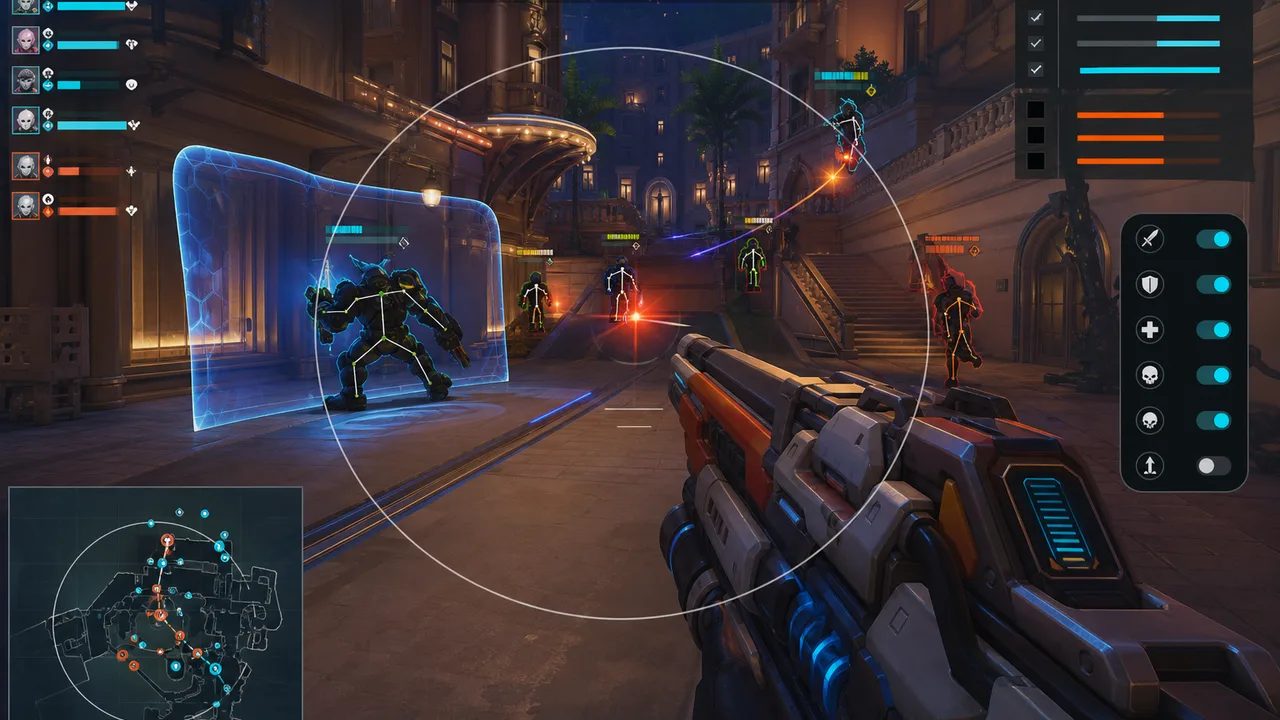
Skeleton ESP is the feature players enable when they want precision — head weakpoints through partial cover, limb tracking during strafe duels, and faster picks on slim heroes like Tracer and Kiriko. It is also the feature players disable two matches later because every team fight looks like a wireframe arcade mode and they cannot see ability VFX or crosshair placement anymore.
Used well, skeleton markers and head ESP turn readable player boxes into commit decisions: “I have line on head — peek now.” Used poorly, skeleton ESP becomes visual static that slows rotations and encourages shots you cannot land even with aim assist. This Guide focuses on bone line styling, head weakpoint markers, styling separation, and how Xray delivers skeleton tooling without forcing you into the full combat automation stack.
When Skeleton ESP Earns Its Screen Space
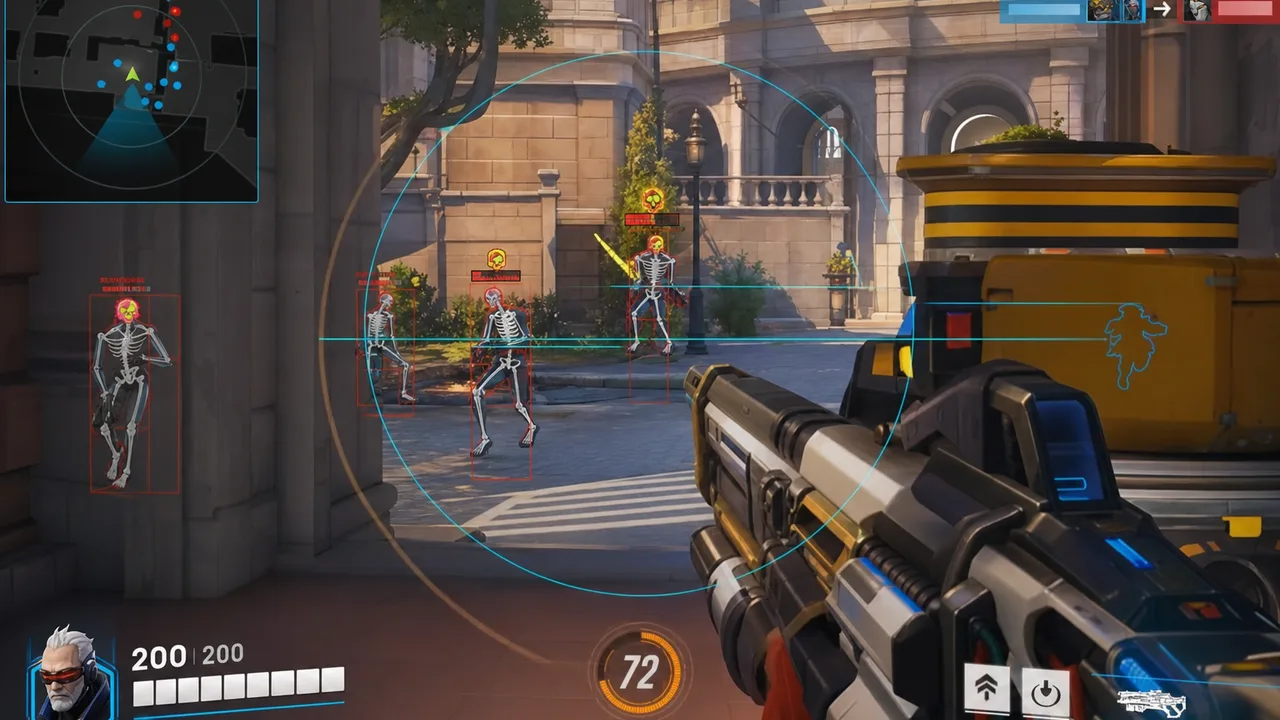
Skeleton overlays add value when:
- You already read box ESP automatically and want finer peek timing
- You play hitscan DPS holding off-angles on slim hitboxes
- You need posture reads — lean direction before full body exposure
- Partial cover fights require knowing head height without full model visibility
Skeleton ESP adds noise when:
- Base box ESP is not tuned yet
- You play support or tank where target priority is macro, not headshot precision
- Team fights stack six heroes in one choke — six wireframes merge into soup
Enable skeleton after boxes and distance feel boring. That boredom means your brain has capacity for more detail.
Bone Line Styling — Thin, Distinct, Distance-Gated
Line thickness — thinner than box outlines. Thick bones merge when heroes cluster on point.
Color — different from box color. Boxes = threat presence; skeleton = aim commitment detail.
Max distance — gate skeleton harder than boxes. Skeleton at 60m on a target you cannot realistically headshot is distraction. Common gate: 25–40m for hitscan, 15–25m for CQB specialists.
Head marker size — small dot or cross, not a second box. The head marker should refine aim, not replace it.
Head Markers and Hitscan Duels
Overwatch 2 headshot multipliers define many DPS matchups. Head markers help when:
- You hold an off-angle and need pre-aim height before peek
- Enemy hero is partial behind cover — only head hitbox exposed
- You track strafe patterns and need consistent vertical anchor
Head markers hurt when:
- You snap to head through smoke or barriers without visibility checks
- Assist + head priority creates inhuman headshot strings on moving targets
- You ignore chest shots that would kill faster on armored targets
Pair head markers with visibility gates on aim assist — skeleton tells you where head is; visibility tells you when shooting is legitimate.
Separating Hero Skeletons From Deployables
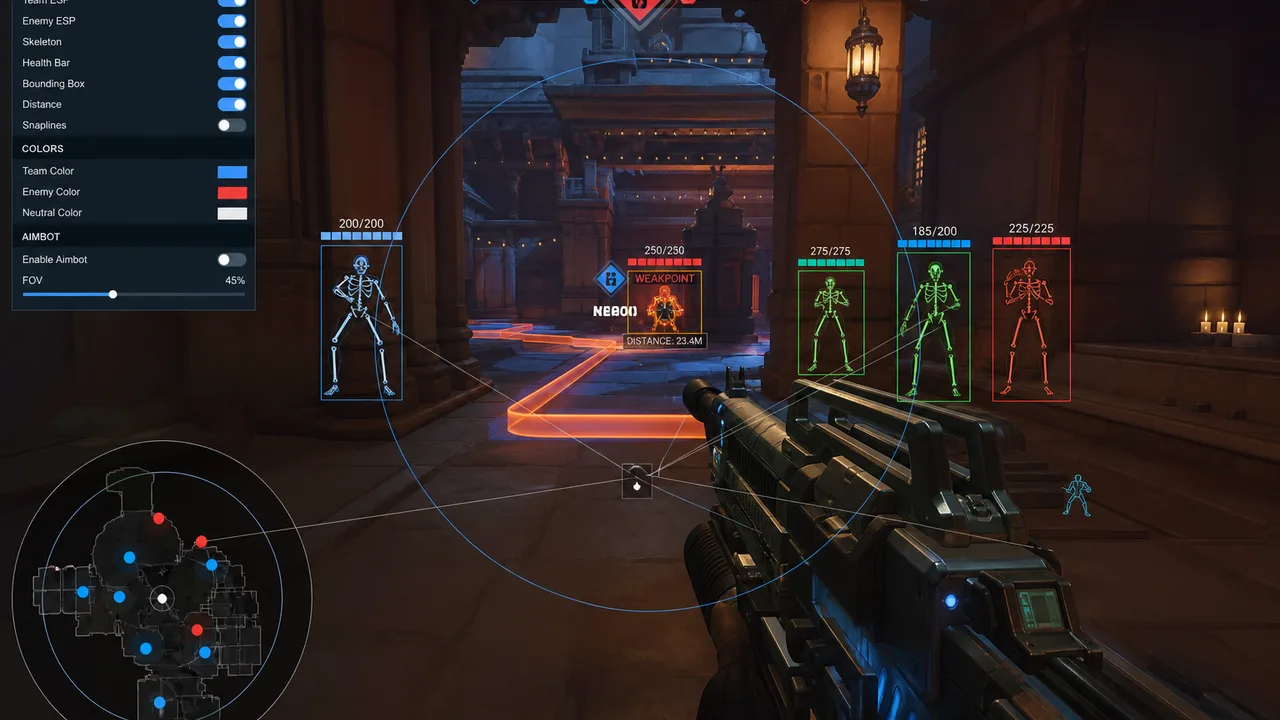
Turrets, shields, and ability entities should not share human bone styling. Mixed styling causes aim assist and trigger tools to engage wrong targets — you track Torbjorn’s turret skeleton while the Tracer kills your backline.
Configure:
- Human heroes — full skeleton or head-only mode
- Deployables — box only or off entirely
- Ability effects — off unless ability ESP Guide recommends specific tracking
Pairing With Xray Tier
Xray includes skeleton markers and head ESP as part of the awareness core — not a premium add-on. That means most ranked climbers can test skeleton without upgrading to Pro. Add Pro when skeleton reads are automatic but trades still slip due to mechanical gaps.
See Xray tier review for current feature confirmation after patches.
Team Fight vs Duel Profiles
Duel profile — skeleton ON, head markers ON, distance gate tight, boxes corner-style.
Team fight profile — skeleton OFF or head-only, boxes ON, radar if available for macro.
Toggle between profiles with a keybind if your menu supports it. Six-hero wireframe team fights are unreadable — and Overwatch 2 is mostly team fights.
Common Skeleton ESP Mistakes
Enabled before boxes work — detail overload on day one.
Same distance as box ESP — distant wireframes everywhere.
Head-only through cover — report magnet behavior.
Never disabled in team fights — visual soup, missed ability tells.
Ignoring ability ESP separation — wrong target priority on deployables.
Bottom Line
Skeleton ESP is precision seasoning on a readable player ESP foundation. Style it thin, gate it close, separate it from deployables, and enable it when duels — not macro — define your rank ceiling. Xray ships the baseline; your discipline determines whether skeleton helps or hurts.
The best skeleton overlay disappears into your aim process — you peek when head exposure is real, not when wireframes tempt impossible shots.