Key takeaways
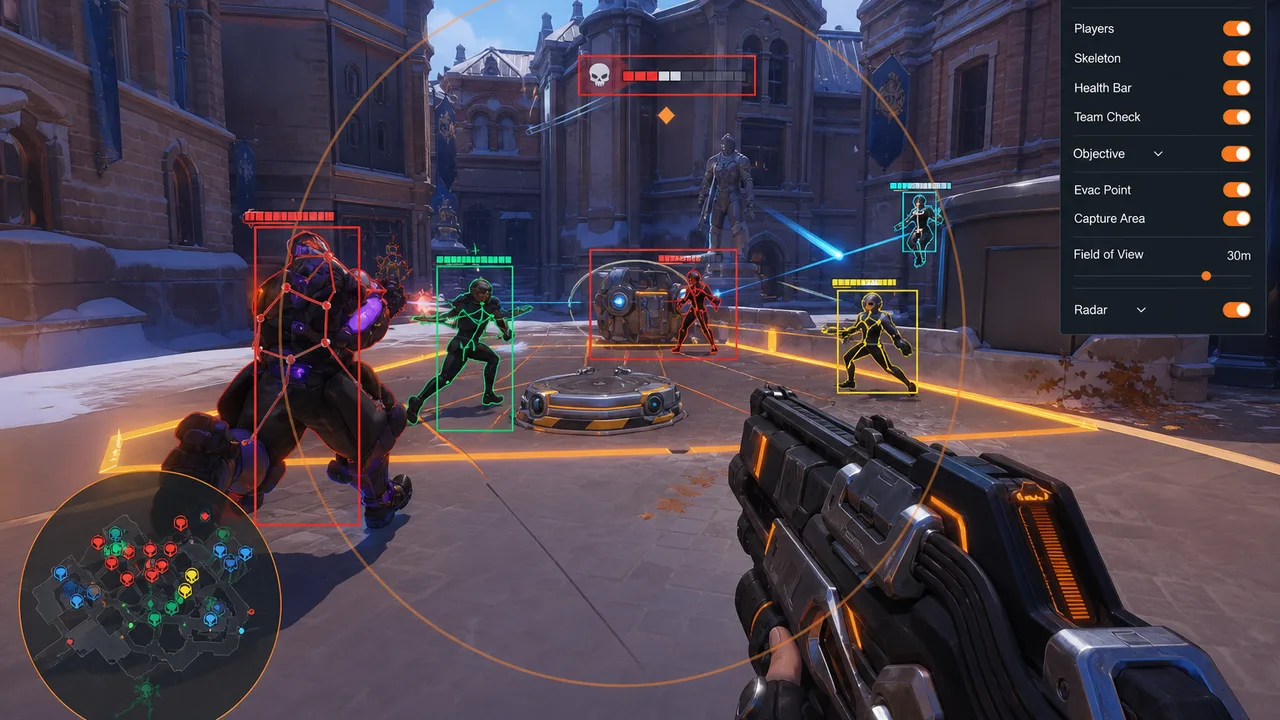
- Objective losses cost more than duel losses — ESP on points and approaching players fixes macro timing, not just aim.
- Sweep radar and point status 30–60 seconds before commit; path for cover even when the point looks empty.
- Xray handles player awareness; Private adds objective ESP and 2D radar for full macro command.
The most expensive death in Overwatch 2 is not the one in the team fight. It is the one on the payload when overtime hits, your supports are dead, and a flanker you never rotated for touches the cart. Rank loss hurts because objective failure is SR failure. Objective ESP — point markers, payload progress readouts, and the player awareness wrapped around them — exists to make those final minutes planned instead of improvised.
This article covers how objective intel works in practice, which tiers ship point tooling, and workflows that keep your rank intact when timers get tight.
Why Objectives Deserve Their Own ESP Category
Player ESP answers who is near you. Health and ult ESP answers what resources are available. Objective ESP answers when and where the map is decided — a different decision tree entirely.
Overwatch 2 compresses tension into objective windows: overtime ticks, stagger timers, third parties racing the same payload, and ability noise masking footsteps. Without point intel, even perfect aimbot users lose matches because they fought the wrong fight at the wrong meter mark.
Payload Maps — Distance, Speed, and Contest Reads
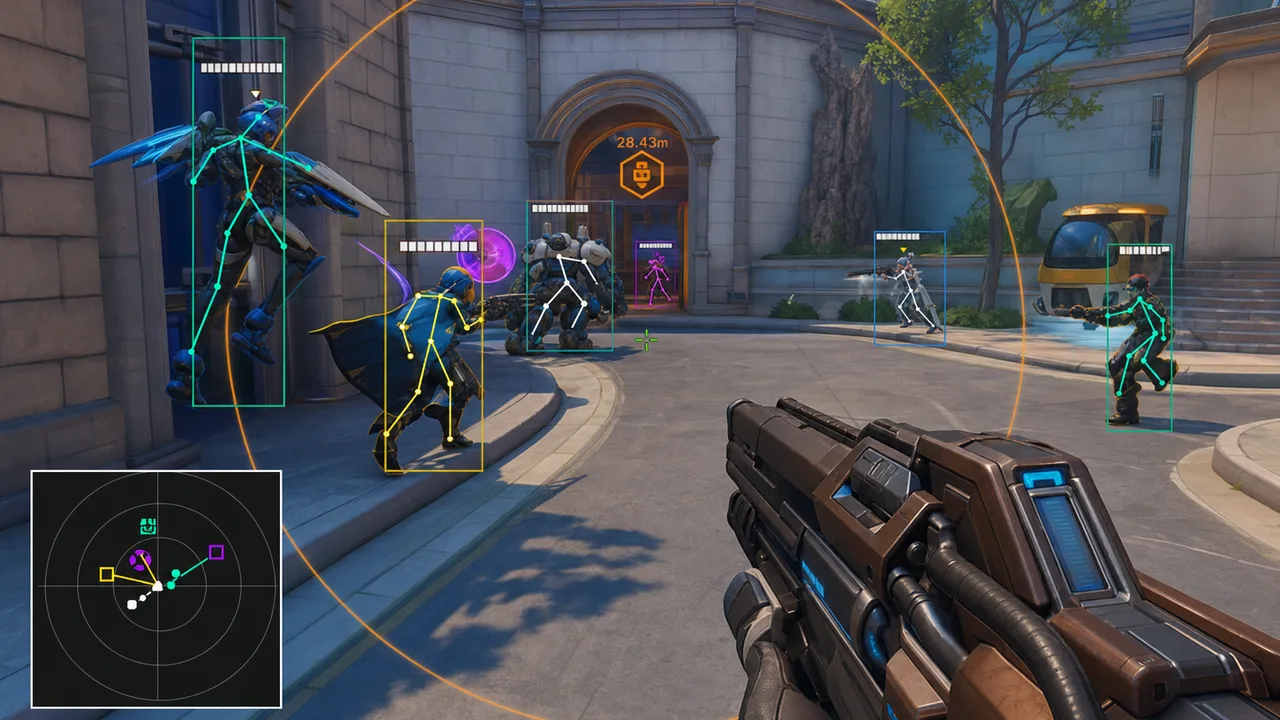
On push maps, three data points matter:
- Payload distance to checkpoint — when to commit ults vs stall
- Contest status — is the cart moving or frozen
- Approach vectors — which lanes enemies use to touch
Objective ESP that shows payload progress alongside enemy proximity lets you call “ult now” or “stall two seconds” with data instead of guesswork. Pair with ult tracking — the classic failure is ulting at 40m when the fight is decided at 5m.
Workflow before each push segment:
- Check payload position and speed
- Scan enemy boxes on approach lanes via player ESP
- Confirm your team’s stagger status (alive count)
- Commit or reset based on combined read
Control and Flashpoint — Zone Priority
Control maps need zone occupancy awareness — not just who you see on screen. Objective ESP showing point capture percentage and contested state helps supports decide whether to stay on payload or peel for backline.
Flashpoint’s moving zone adds another layer: ESP that tracks zone location and travel path prevents teams from rotating late to the new fight area. Without it, you win the skirmish and lose the point because half the team was still walking from the old zone.
Tier Breakdown
Xray — strong player ESP for fights on and around objectives; may lack dedicated payload progress overlays depending on build. Enough when your deaths are “did not see them” not “did not know cart position.”
Pro — adds weapon ESP and combat tools for contest fights; still macro-light compared to Private.
Private — full objective ESP package with payload progress, point status, and 2D radar for approach lane reads. The upgrade when macro losses dominate replay review.
See Private Viper guía for full-stack objective workflows.
Pairing Objective Intel With Positioning
Objective fights are choke holds. Player ESP from payload lanes should trigger off-cart positioning — cover near the fight, not standing on the marker. Cross-read positioning ESP habits for angle setup before contest begins.
Winning the duel on point means nothing if the enemy team caps during your reset walk. Objective ESP keeps the map clock in peripheral vision while you manage the fight clock.
Attack vs Defense Profiles
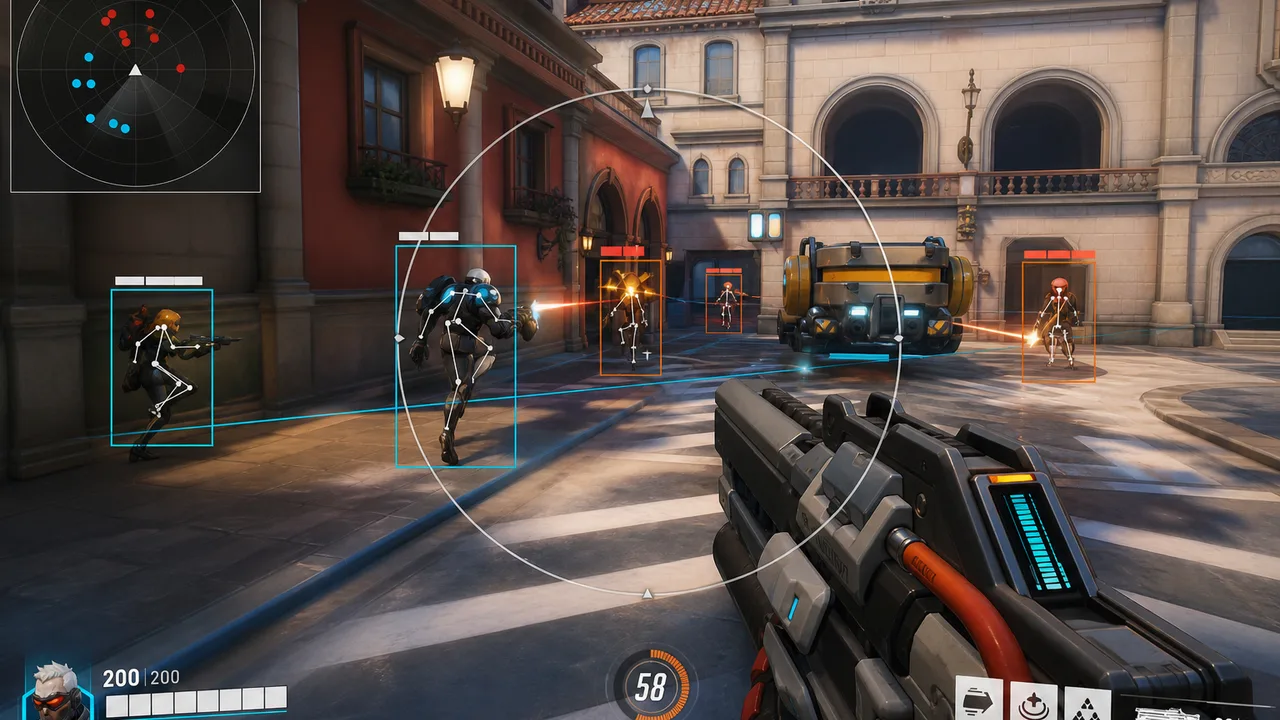
Save separate configs:
Attack profile — emphasize payload speed, enemy spawn approach vectors, your team’s ult advantage for push timing.
Defense profile — emphasize contest status, flank routes to cart, stagger prevention (who is still dead).
Most players use one profile and wonder why attack feels blind on defense or vice versa. Objective ESP filters should shift with side — not stay static all match.
Common Objective ESP Mistakes
Fighting off point while cart moves — ESP showed the payload; you ignored it for a duel.
Ulting before checking contest status — wasted Grav on a frozen cart.
No Plan B route — one approach lane in mind; ESP showed three enemies stacking it; no rotate.
Objective ESP without player ESP — know cart position, die to unseen flank anyway.
Bottom Line
Overwatch 2 matches are won on objectives, not kill feeds. Objective ESP makes payload meters, capture progress, and contest windows as readable as enemy health bars. Start with Xray player awareness, add dedicated objective tooling on Private when macro losses outnumber mechanical ones, and always pair point intel with positioning discipline.
The cart does not care about your highlight reel. Objective ESP makes sure you care about the cart.