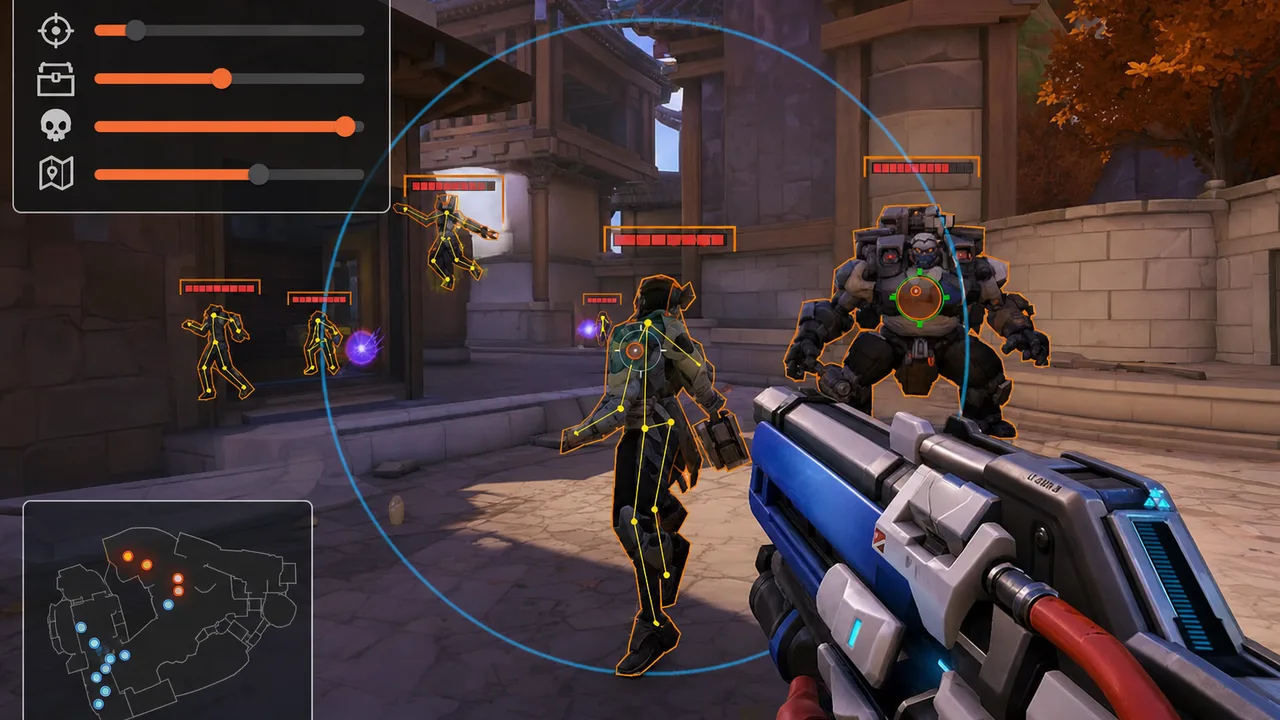
Key takeaways
- Ability ESP lets you play around enemy cooldowns instead of burning resources into ready abilities.
- Cooldown tracking and deployable markers speed target priority when engagement is unavoidable — Xray includes baseline ability tooling.
- Private adds full ability radar and deployable aim assist for complex compositions that mask player audio.
Overwatch 2 is not pure aim duels. Deployables, shields, and ability windows punish static positioning, dump cooldowns before a flank ever shoots, and mask audio cues you rely on for awareness. Ability ESP — cooldown overlays, deployable markers, turret visibility — keeps ability economy from stealing the resources you need for team fights. Treat ability intel as part of your overlay stack, not a side feature you toggle off after install.
This guía covers deployable tracking, cooldown reads, ability threat priority, and tier differences between Xray, Pro, and Private Viper.
Why Ability ESP Matters in a Hero Shooter
Players buy trucos for DPS duels — then die to a turret while a Tracer closes on sound. Ability losses are silent rank killers: less cooldowns, less positioning options, worse objective timing, more stagger.
Ability ESP flips the equation:
- See Torbjorn turret placement before committing to a lane
- Track enemy defensive cooldowns (Bubble, Rally timing windows)
- Identify trap and mine locations on flanking routes
- Know when key offensive abilities are on cooldown before pushing
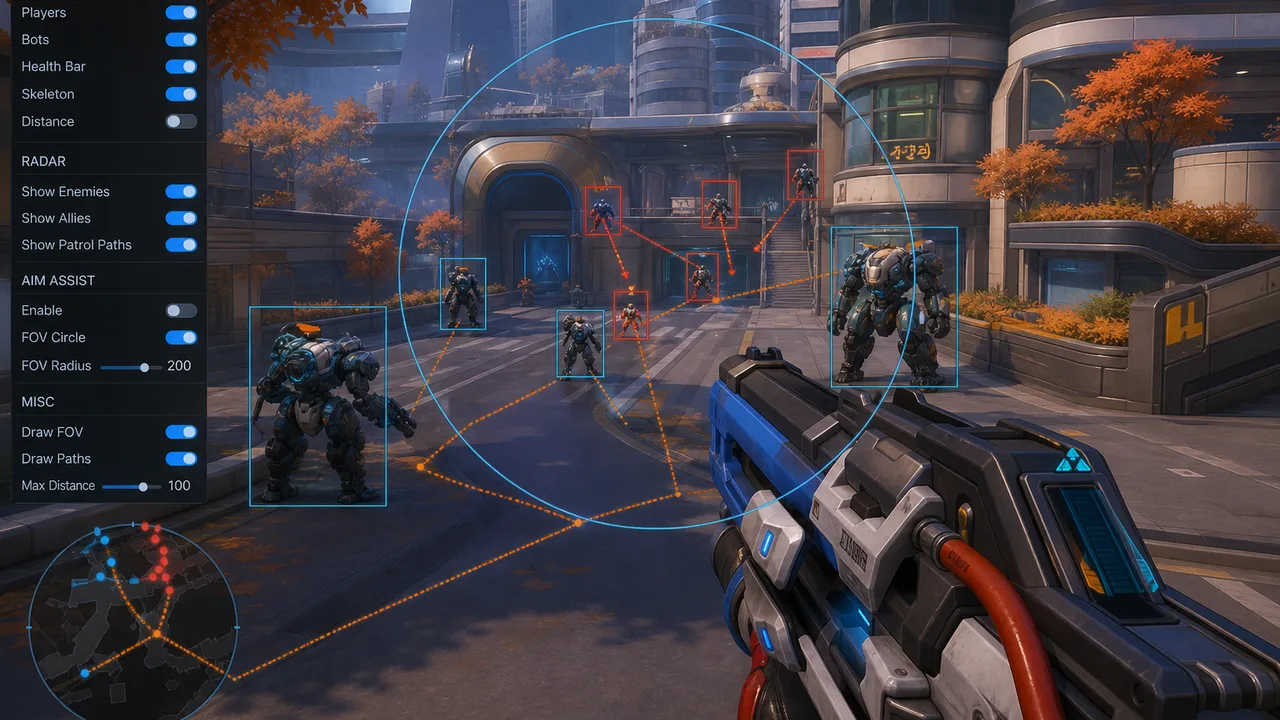
Deployable Tracking — Turrets, Shields, Mines
High-value deployable categories:
- Damage deployables — turrets, rip-tires, stuck bombs
- Zone control — shields, walls, ice blocks (post-thaw position)
- Trap utilities — mines, traps, sleep setups
Mark deployables with distinct icons from human player boxes. Same-color turret and Tracer markers cause peel mistakes — you shoot the static target while the mobile threat completes the kill.
Distance-gate deployables harder than players. A turret 40m away matters only if you are pathing through its lane.
Cooldown ESP — When to Push
Cooldown tracking shows enemy ability status — not just ult charge from health and ult ESP, but key fight abilities:
- Genji deflect status
- Cassidy flashbang availability
- Support defensive cooldowns (Immortality, Res beat timing)
Push windows open when two or more enemy fight abilities are on cooldown. Ability ESP makes that window visible instead of guessed.
Tier Differences
Xray includes baseline deployable markers and key cooldown indicators alongside hero ESP — enough for ranked climbing when ability surprises define occasional deaths, not every fight.
Pro focuses on combat automation — aim assist, trigger tools, weapon ESP. Ability features from Xray carry forward, but Pro buyers should not expect full ability radar. Use Pro when hero duels after ability segments define your deaths.
Private Viper adds full ability ESP, deployable radar layers, and deployable targeting assist — the complete ability visibility stack. When turrets and zone abilities combine on choke-heavy compositions, Private users route or clear without guessing placement timing.
See Private Viper guía for full-stack ability workflows.
PvE Training vs Live Ranked
Ability ESP value differs by context:
- Ranked competitive — cooldown and deployable priority highest on control and push maps
- Quick Play — lighter filtering acceptable; chaos is higher anyway
- Custom games / warm-up — test ability layer styling before ranked
Do not copy Quick Play configs into ranked — ability density and team coordination differ massively.
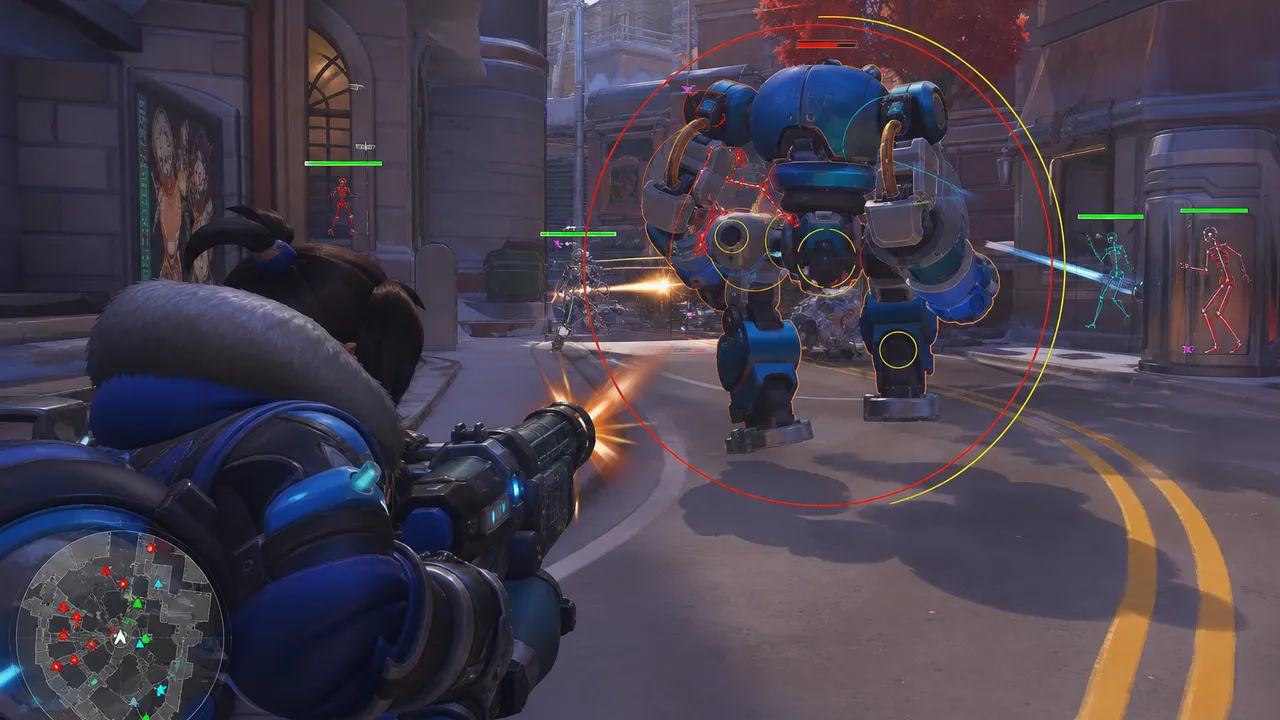
Pairing With Skeleton and Radar
Skeleton ESP on human heroes + box markers on deployables = clean target hierarchy. 2D radar shows ability deployable positions off-screen — turret behind wall, trap on flank route.
Integration rule: human threats first, deployables second unless the deployable is actively killing you.
Ability ESP and Anti-Cheat Posture
Ability overlays read game state like other ESP categories — subject to the same Blizzard anti-cheat maintenance cycle. After patches, verify deployable markers still align with updated ability visuals. Hero reworks (turret reworks, shield changes) may require filter updates.
Upgrade Path by Death Type
Die to turrets/traps on flank routes: Start Xray deployable tooling — Xray tier review.
Lose duels after ability trades: Pro after positioning basics — Pro tier review.
Choke-heavy comps with dense deployables: Private ability + radar stack.
Compare all tiers on /es/cheats/.
Common Ability ESP Mistakes
Every cooldown highlighted — visual noise, no priority.
Deployables same color as heroes — wrong target selection.
Ignoring ult ESP overlap — duplicate information styled differently.
Ability ESP without phase toggles — clutter during setup when you only need player reads.
Bottom Line
Ability ESP protects the fight you are setting up for — fewer surprise turrets, fewer pushes into ready defensives, fewer stagger losses from ignored deployables. Weakpoint tooling on Xray handles baseline tracking; Private ability and radar layers handle compositions where abilities are the primary navigation problem.
Hero shooters are ability games first. Ability ESP makes that layer readable.