Key takeaways
- Solo players benefit most from ult ESP, objective awareness, and conservative aim settings.
- Teams gain more from shared callout depth, wider radar coverage, and coordinated push tools.
- Match tier spend to how much information your group already supplies organically.
The cheat tier that carries a solo ranked player to Diamond is not always the tier that maximizes a coordinated five-stack. Solo play punishes missing information you cannot comm. Team play punishes redundant overlays when three players already call flanks. Matching tier spend to how you actually queue is one of the highest-ROI decisions in this space — and one of the most ignored.
This guía breaks down feature priorities for solo ranked climbing versus team stacks, maps tiers to playstyles, and explains when mixing tiers inside a group makes sense.
Solo Ranked — Information Is Everything
When you queue alone, you absorb every failure mode:
- No guaranteed comms for enemy ult tracking
- No coordinated peel when you get flanked
- No IGL calling rotates on payload maps
- Random hero comps every match
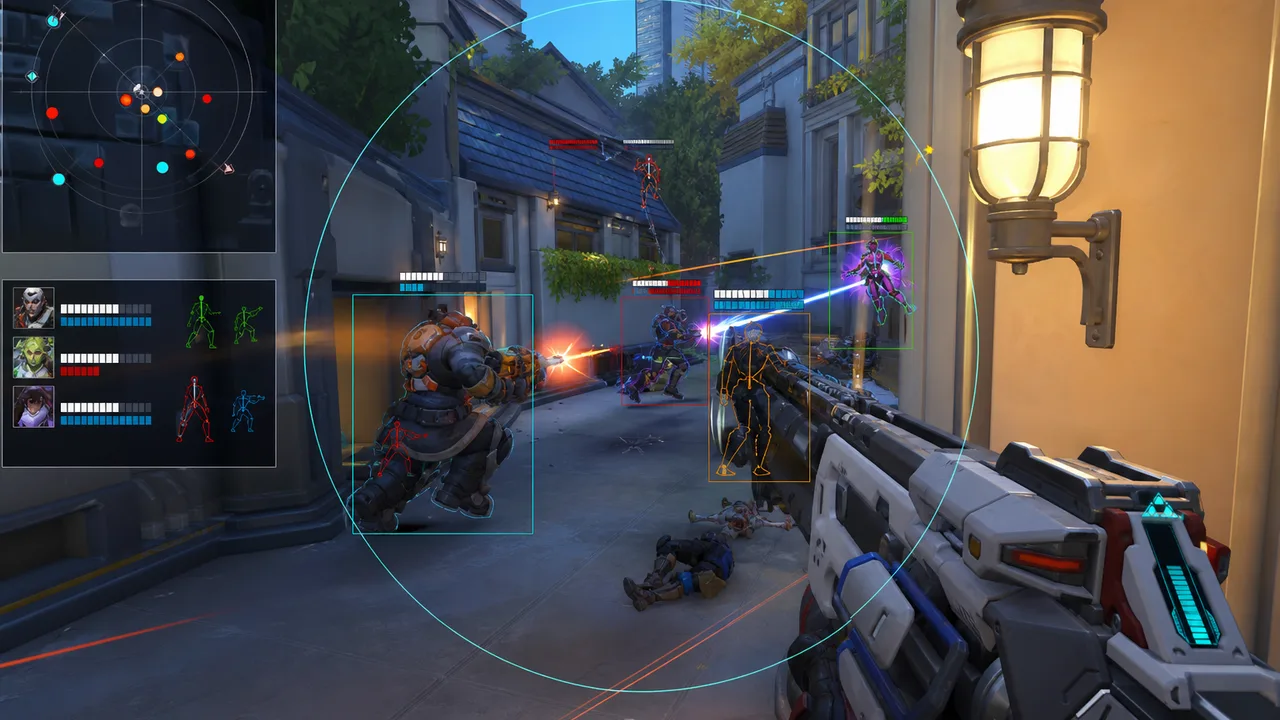
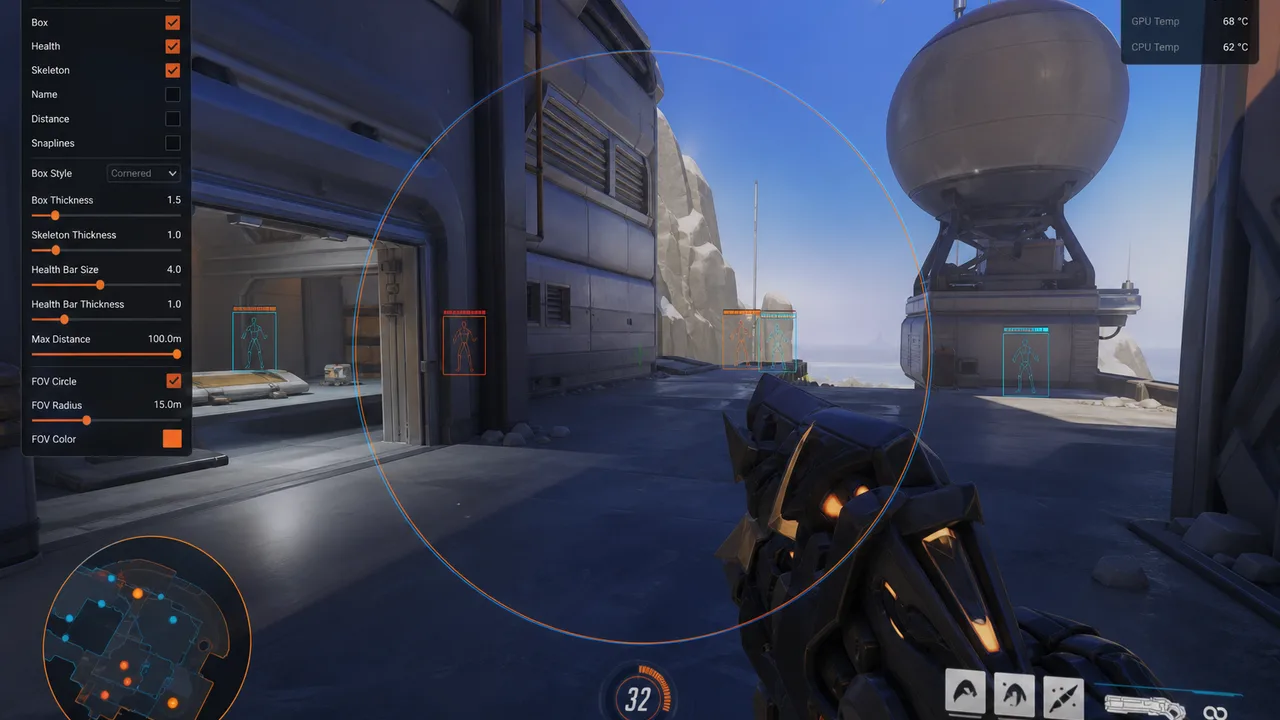
Solo players die most often to information gaps — unseen flanks, surprise ults, bad fight timing. That makes Xray and its player ESP + ult tracking stack the default recommendation. Solo players rarely need Private radar on day one unless third parties define every death.
Solo priority stack:
- Player ESP + distance (ESP guía)
- Ult and health resource filters (health ult ESP)
- Objective awareness (objective ESP)
- Conservative aim assist on Pro only after awareness plateaus
Solo ajustes discipline:
- Lower ESP max distance — you cannot rely on teammates to cover wide angles
- Enable enemy ult Tier 1 tracking always
- Disable combat automation during setup and respawn walks
- Shorter sessions with consistent configs beat marathon rage queues
For most lone-wolf climbers, an entry-to-mid tier with strong ESP and light aim support covers the real failure points. Browse cheat tiers starting from awareness-heavy options before stacking full combat automation you will rarely need if your goal is win rate.
Team Stack — Specialization and Redundancy Control
Five-stacks with comms already supply:
- Ult tracking via voice
- Flank calls from multiple angles
- Coordinated push timing
- Role assignments
Team cheat value shifts toward mechanical closure and macro tools comms cannot replace instantly — weapon ESP for instant threat ID, radar for silent rotate confirmation, aim assist for duel roles.
Team priority stack:
| Role | Suggested tier focus | Why |
|---|---|---|
| IGL / Shotcaller | Private radar + objective ESP | Macro map control |
| Main DPS | Pro aim + weapon ESP | Duel closure |
| Flex DPS | Xray or Pro | Awareness + occasional duels |
| Support | Xray + ult ESP | Cooldown confirmation |
| Tank | Xray + positioning ESP | Space and angle reads |
Redundancy rule: Not everyone needs Private. One radar anchor plus Xray teammates often beats five Private menus creating conflicting callouts.
Mixed Tier Squads — Practical Setup
When friends run different tiers:
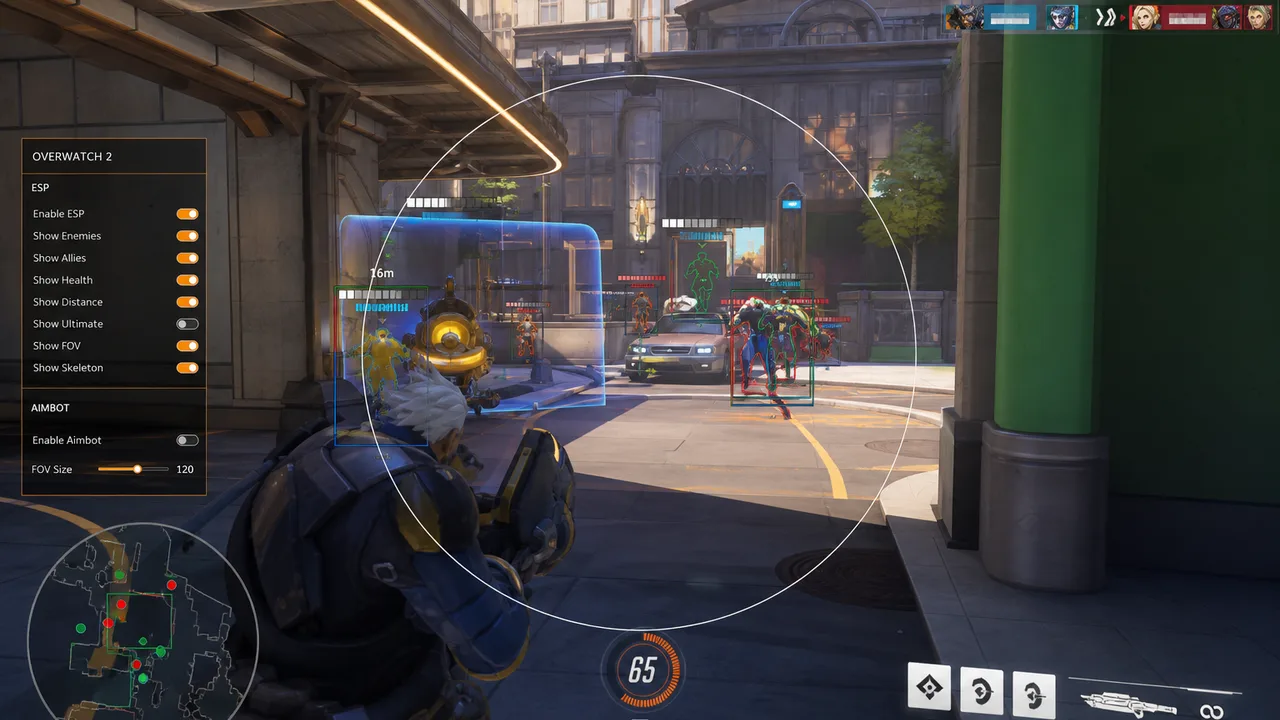
- Designate one macro anchor with best radar/objective tooling
- Avoid duplicate ult callouts — if two players scream Grav timing from ESP, team noise increases
- Comms translate ESP to movement — “closing 20 left” beats silent box watching
- Align combat automation — one player rage-aiming while others play subtle creates inconsistent team tempo
See positioning ESP for squad angle chains.
When Solo Players Should Upgrade Beyond Xray
Upgrade triggers for solo queue:
- Win rate above 55% but duels still slip → Pro
- Third-party deaths dominate replays → Private radar
- Macro losses on payload despite good fights → objective ESP on Private
- Hardware ban recovery → HWID spoofer before new account — see spoofer guía
Do not upgrade because of feature list length. Upgrade because replay review names a specific death type your current tier does not address.
When Teams Should Not Over-Buy
Teams over-buy when:
- Everyone runs max combat automation — stagger timing falls apart
- Three players enable radar — same blip, three voices, zero clarity
- Support players run aimbot — role misalignment wastes tier spend
- No one owns objective ESP — win fights, lose maps anyway
Quick Play vs Ranked — Same Tier, Different Profiles
Same tier, different config slots:
- Ranked solo — ult focus, conservative aim, objective ESP ON
- Ranked team — weapon ESP, radar on anchor, reduced ult overlay if comms reliable
- Quick Play — lighter filters, experimental aim ajustes
Never copy Quick Play rage configs into ranked solo — chaos tolerance differs.
Bottom Line
Solo ranked rewards self-sufficient awareness on Xray with selective Pro upgrades. Team stacks reward specialized roles with one macro anchor on Private and combat closure on DPS. Match tier to queue type, eliminate redundant overlays inside groups, and upgrade when death types — not marketing — demand it.
Read the full trucos guía and feature ranking before purchasing for the wrong playstyle.