Key takeaways
- No Overwatch 2 cheat is permanently safe — anti-cheat updates, reports, and behavior analysis all matter.
- Undetected means maintained today, not guaranteed tomorrow; provider update speed is critical.
- Your play patterns and session hygiene often create risk faster than the software itself.
Overwatch 2 runs under Blizzard’s anti-cheat infrastructure — kernel-level components, behavioral analysis, and report-driven review that together create an environment where no cheat is permanently invisible. Players who understand that upfront make better buying decisions, configure more conservatively, and last longer than players who treat “undetected” as armor.
This guide explains what Blizzard’s anti-cheat actually targets, how cheat providers respond, and what you control versus what you cannot.
What Blizzard Anti-Cheat Monitors
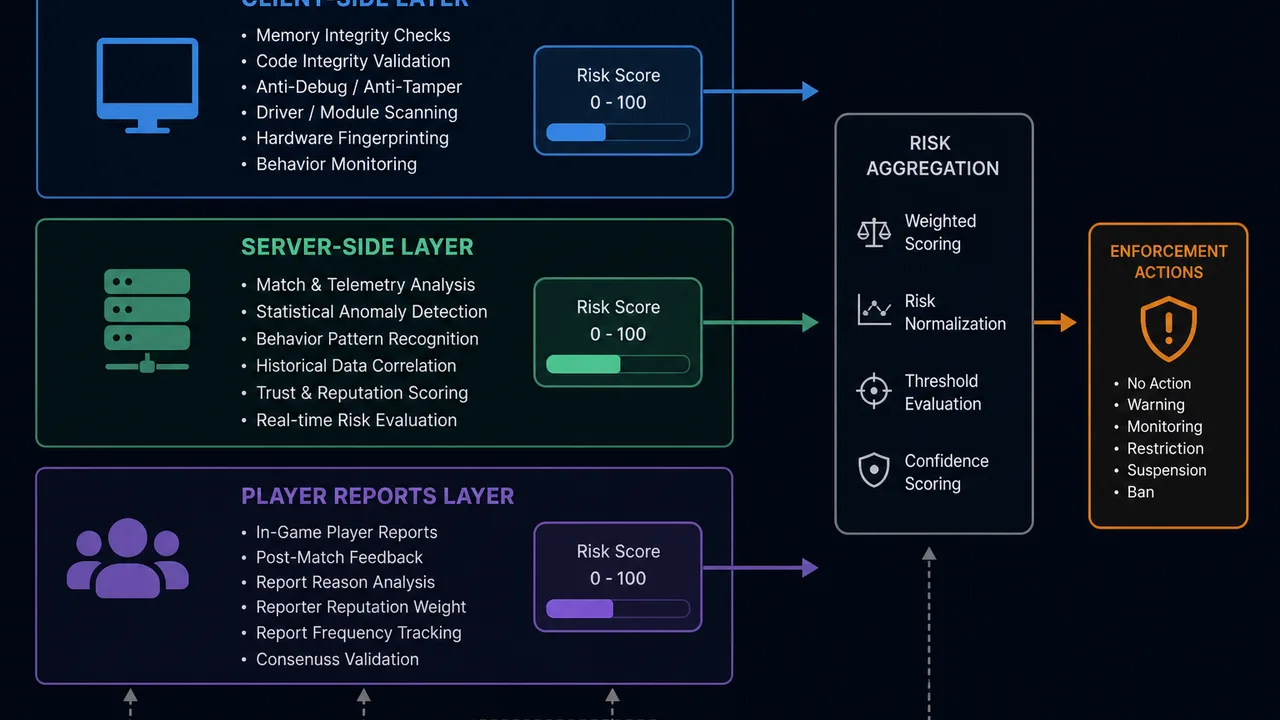
Modern anti-cheat in Overwatch 2 typically combines:
Signature and integrity checks — known cheat modules, modified game memory, suspicious drivers.
Behavioral heuristics — aim patterns inconsistent with human input, impossible reaction windows, statistical outliers over many matches.
Report pipeline — player reports trigger review queues; suspicious gameplay gets scrutinized even when signatures pass.
Hardware correlation — account and machine linking after restrictions — where HWID spoofer enters as a separate layer.
No single layer catches everything. Risk accumulates across layers over time.
What “Undetected” Means in Practice
Undetected = this build passes known checks at release time, maintained by a provider who ships updates when Blizzard patches.
Undetected does not mean:
- Reports cannot get you reviewed
- Rage paramètres are safe because the loader passes
- Hardware bans cannot happen
- Yesterday’s build works after today’s patch
See undetected myths for the full honest breakdown.
Provider Maintenance — What Good Looks Like
Reliable providers:
- Ship updates within hours to days of major Overwatch 2 patches
- Communicate downtime and detection status honestly
- Document setup steps that reduce user-induced failures
- Maintain changelogs tied to game version numbers
Unreliable providers:
- Silent after patch day
- “Still UD” claims without version proof
- No support when loader crashes post-update
Evaluate providers on evidence, not ad copy. Browse structured cheat tiers with visible feature and update standards.
User-Controlled Risk Factors
You control:
- Config intensity — FOV, smoothing, trigger delay (low-profile guide)
- Session patterns — marathon identical play vs varied sessions
- Feature discipline — ESP before rage aim (feature ranking)
- Patch workflow — setup checklist after updates
You do not fully control:
- Signature updates targeting your loader framework
- Mass detection waves on popular builds
- False positives (rare but documented in anti-cheat ecosystems)
Reports vs Technical Detection
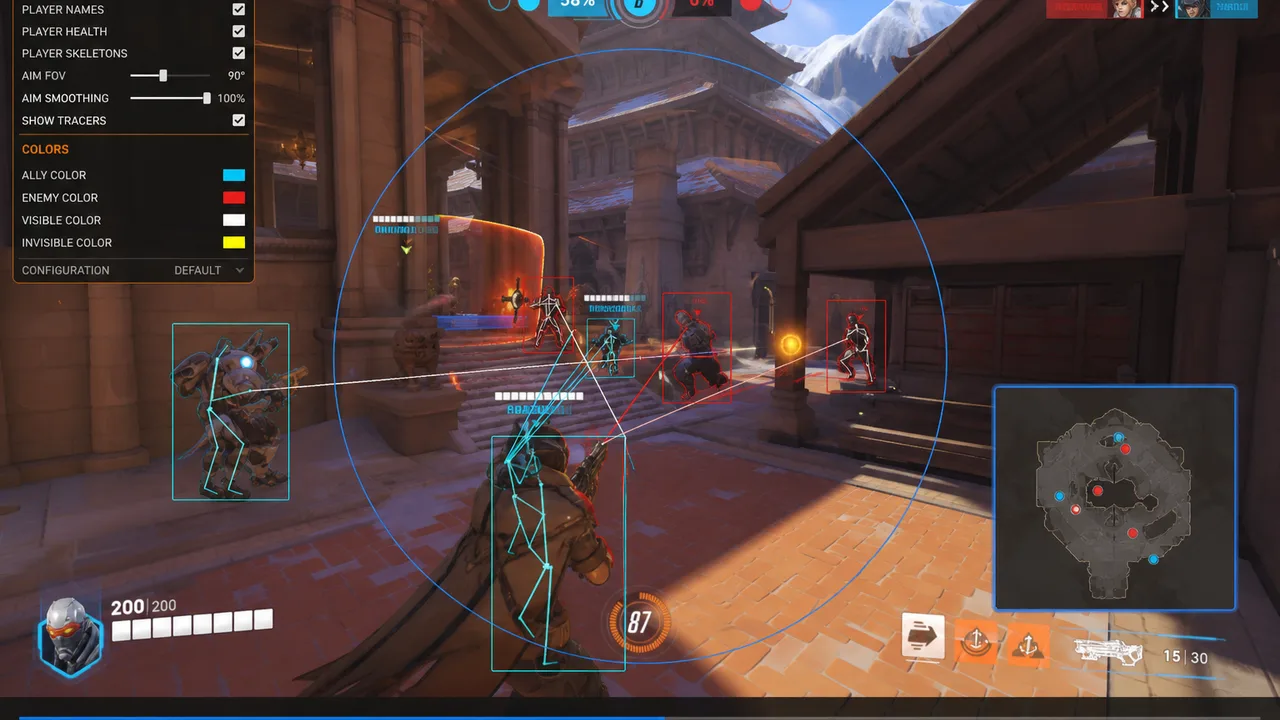
Players often assume bans are purely technical. Reports matter — especially in high-SR lobbies where players review replays. Obvious tracking through walls, instant 180 headshots, and pre-fire through barriers create report volume that accelerates review.
Play like spectators could watch every fight. If killcam footage looks inhuman, paramètres are too aggressive regardless of loader status.
Hardware Bans and Recovery
Account restrictions can escalate to hardware-level correlation. HWID spoofer addresses identifier masking — not cheat detection itself. Deploy in correct order per HWID spoofer with cheats guide.
Recovery workflow:
- Stop using flagged build immediately
- Clean environment per spoofer docs
- Spoof before new account login
- Rebuild config from minimal ESP — do not import old rage presets
Ranked Session Hygiene
Practical habits:
- Verify build version matches current patch before queue
- Test one Quick Play match before ranked streak
- Disable combat automation during warm-up
- Avoid streaming without stream-safe setup
- Run patch survival workflow after balance updates
Bottom Line
Blizzard anti-cheat is a living system — not a wall cheats permanently bypass. Undetected status is a maintenance contract between provider and game version, not a personal guarantee. Your configs, behavior, and patch discipline determine whether that contract lasts weeks or hours.
Enter Overwatch 2 cheats with open eyes: usable advantage is achievable with maintained software and smart play. Risk-free advantage is not. Plan accordingly.